

Unlocking Growth in EU, ME, and SEA
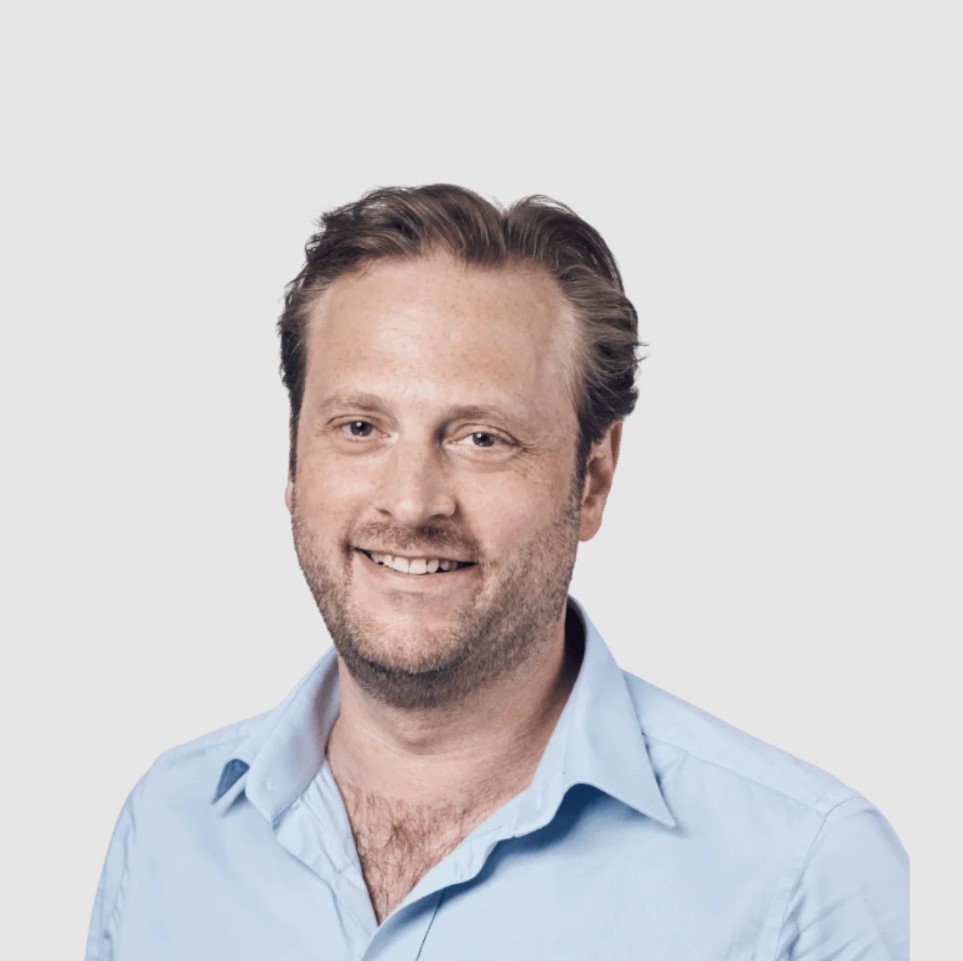
Here is an interview with Tenity's Venture Partner - Maximilian Plank. About Tenity's Go Global Bootcamp Program.
FTAHK:
The bootcamp’s manifesto states: 'The best scaleups don't wait for the right moment—they create it. Global expansion is no longer optional.' In today’s cautious economic climate where many VCs advise startups to 'focus on their core and conserve cash,' why do you believe staying local is actually a bigger risk for B2B and Fintech companies? What are the key factors that make geographic diversification outside Greater China increasingly essential?
Max:
"Staying local is a trap of diminishing returns. In Hong Kong and Mainland China, hyper-competition has crushed margins, making domestic-only growth a race to the bottom.
The real risk isn't expanding; it’s sitting still while owning a massive, high-value data set that would command a premium in less saturated markets. These companies already have the "fuel" -proven tech and deep data - to dominate. We designed the Go Global Bootcamp to be the "engine" that converts that fuel into global traction, replacing expensive "trial and error" with a calculated, de-risked roadmap to the highest-margin markets in the world."
FTAHK:
You’ve worked with over 200 portfolio companies and noted that 'expansion without direction is just expensive tourism.' What is the single most devastating - yet completely avoidable - mistake you see Asian scaleup founders make when trying to enter complex markets like Europe or the Middle East?
Max:
"It’s treating expansion as a "discovery trip" rather than a precision strike. The most common failure is picking a target country based on gut feeling or proximity rather than a systematic, data-driven approach. Without a real strategy, founders consistently underestimate the "Triple Threat": budget, team bandwidth, and the nuances of local business culture.
In the Middle East, a partnership isn't just a signed contract; it’s a relationship built on trust and cultural alignment. If you enter these complex markets without a localized "GTM Engine" and a clear direction, you aren't expanding—you’re just funding a very expensive world tour for your executive team. The Go Global Bootcamp replaces this "trial and error" with a structured framework, ensuring your first move is your best move."
FTAHK:
The 'Go Global Boot Camp' specifically bridges Hong Kong/Chinese scaleups to Europe, the Middle East, and Southeast Asia.
While Southeast Asia is a relatively familiar and adjacent market, Europe and the Middle East (particularly with initiatives like Saudi Vision 2030) represent distinctly different environments in terms of regulation, culture, consumer behavior, and economic priorities.
What are the most significant, yet often overlooked or untapped opportunities that Asian founders in Fintech are currently missing or underestimating in these regions?
Max:
"Many Asian founders underestimate how European and Middle Eastern institutions want to leapfrog their current systems, but they fail because they lack the right "entry infrastructure.”
Another opportunity is a consumer behavior shift in these regions that mirrors exactly what we saw in Asia a decade ago. We are seeing a move away from legacy banking toward a mobile-first, "lifestyle-integrated" B2C experience. Asian founders often underestimate that they aren’t just bringing "new tech" - they are bringing proven solutions for a future these regions are just now entering.
The Go Global Bootcamp is the GTM Engine that bridges that gap.
The Middle East (The Relationship Opportunity): Beyond just Saudi Vision 2030, the opportunity lies in becoming a long-term strategic partner. Here, trust is personal. It is built through the "handshake," local presence, and deep relationships. If they don’t trust the founder, they won’t buy the software. We facilitate this by using our network in the region to find the best partner / entry for each participant.
Europe (The Technical Opportunity): Europe is a transactional market where trust is technical and regulatory. The opportunity here is for scaleups that can solve a problem better or cheaper than incumbents - specifically by helping banks serve more clients or slashing operational costs. In Europe, while relationships are important - real trust is built on compliance and proven track record.
In SEA you need to prove you can navigate a fragmented landscape, The "Localized Trust" Model: Trust in SEA is built through Local Partnerships. In markets like Indonesia or Vietnam, you don't just "enter" - you "embed." You win by finding the local conglomerate or the dominant digital wallet and proving you can make their ecosystem stickie."
FTAHK:
With over $140M in assets under management, 250+ corporate collaborations, and a deep 'Fintech-first' focus, Tenity has a front-row seat to global financial innovation. Looking ahead to the rest of 2026 and beyond, what is the next massive shift in Finance, Fintech, and adjacent tech sectors that scaleups need to be building for right now to remain globally competitive?
Max:
"The shift is a transition from "AI as a feature" to "Agentic Finance" backed by deep structural moats. By the end of 2026, simply having a "good product" won't be enough. To survive and lead, scaleups must anchor their expansion in three non-negotiables: deep domain expertise, a fully licensed regulatory foundation, and proprietary data.
Internal Efficiency as the Moat: You should have AI embedded in every internal process—from automated regulatory reporting to real-time cross-border treasury management. In transactional markets like Europe, if your operations aren't AI-driven, your cost-to-serve will be too high to compete. However, this only works if your AI is fed by proprietary data that your competitors can't access.
Hyper-Personalization at Scale: In the Middle East and Southeast Asia, the "mass market" is dead. The next winners are using AI to provide private-banking-level service to millions of users simultaneously. This requires more than just code; it requires deep domain expertise to understand local nuances and a licensed, regulatory-compliant framework to execute financial transactions safely in real-time.
The Regulatory Edge: In 2026, a "license" isn't just a hurdle - it’s a competitive weapon. Having the right regulatory permissions in place allows your AI agents to move from "suggesting" actions to "executing" them, creating a seamless experience that unlicensed competitors simply cannot match.
The Bottom Line: To be globally competitive, you need the "Triple Threat": the intelligence (AI/Proprietary Data), the authority (Licenses), and the wisdom (Domain Expertise) to apply them. The Go Global Bootcamp provides the entry infrastructure to help you align these three pillars with the specific requirements of your target markets."
FTAHK:
Why did we design the Go Global Bootcamp this way?
Max:
"Most programs offer "advice." We offer infrastructure. We designed this to be a 4-week "GTM Engine" because founders don't need more lectures; they need market validation, product market fit challenge, the 3–5 direct intros that turn a strategy into a pipeline and an executable realistic budget."
FTAHK:
What is the "unfair advantage" of joining?
Max:
"Most founders spend 12+ months piecing together the market context, relationships, and regulatory clarity that this program compresses into four weeks. Participants leave with a validated 90-day execution plan and direct introductions to relevant partners - not a slide deck."
FTAHK:
Most founders are hesitating because of the headlines. Is looking at the Middle East right now a gamble or a masterstroke?
Max:
"Periods of macroeconomic uncertainty historically create asymmetric entry opportunities, particularly in markets with structural demand and long-term government mandates behind them. The question isn't whether to enter; it's whether to enter with preparation or improvisation. The program includes direct engagement with key institutional stakeholders in target countries, including representation from investment facilitation bodies actively seeking qualified international partners. By handling the groundwork for you, we ensure you aren't guessing - you're executing."